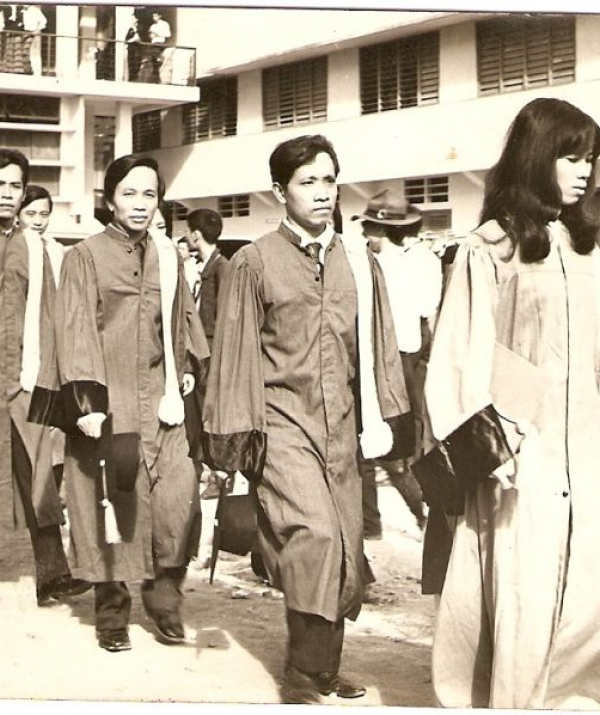
How much time does it take to be called a time? One month, three months, half a year, a year or more! Almost all of the duration is correct, but the main thing is that during that time there must have been or has been something very outstanding, which has become associated with the intellectual baggage of one's whole life. In this sense, for us, the time mentioned in this article was the last academic year at Saigon University of Literature and Science, the academic year 1967-1968, when we were invited by Venerable Thich Minh Chau – who was then called the Venerable Chairman, who was the President of Van Hanh University. is a visiting professor of Saigon University of Literature and Science – directly teaching.
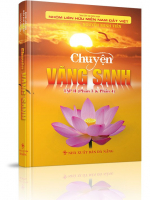
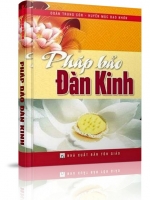
It is very happy to meet a person whom I have always admired and revered in my youth, and who was especially taught directly by him. When I was a child, when I first entered the monastery to study the Tao, one of the books collected in our personal library was the Buddhist Dharma book, co-authored by Minh Chau, Thien An, Duc Tam and Chon Tri. Although the book is a document for young Buddhists, it is also a very useful document for beginner monks like us. The book is not very thick, but the content contains a lot of universal Buddhist knowledge, helping readers understand some of the characteristics of Buddhism. The couplet at the stupa of Patriarch Lieu Quan (1667-1742) is mentioned in the book: "Maintain the long and clear immortality of the precursor of the six waters. The Dharma is alone, naturally sitting in the audience." Meaning: "The sound of the sound of the sound is famous, in front of the alley there is a non-stop stream. The Dharma body is soaring, and the tall building is surrounded by green mountains." [1] It can be said that the deepest impression was when we met one of the four authors of the book at that time, Venerable Thich Minh Chau.
In 1965, the Buddhist College located at Phap Hoi Pagoda was moved to 222 Truong Minh Giang[2] and officially changed its name to Van Hanh University Institute – the name of a famous Zen master in Vietnam during the Ly Dynasty. The school is headed by Venerable Minh Chau. This place has trained many strata of good intellectuals to devote to Buddhism and contribute to the construction of the country. In the same year, we enrolled at Saigon University of Literature and Science. Literature at that time gathered many famous philosophy professors and researchers such as Professor Nguyen Dang Thuc, Nguyen Duy Can... In particular, Professor Jian Chi is a person with ancient erudite knowledge, published many books of academic value, translated many works, and is a Buddhist who understands Buddhist philosophy. But most of all, Venerable Thich Minh Chau has left us a lot of admiration.
The image of a young monk wearing a dark yellow robe, a gentle and wise physique, and a smile was always hidden in front of everyone opposite, especially when meeting young monks. For us at that time, it was a wonderful image. That image has lit up the entire campus of the University of Literature every day when Venerable Minh Chau[3] appears. The image of walking quickly up the stairs, passing through the corridors to room X, which is reserved for students studying for a certificate in Indian Philosophy, is still visible. More than 45 years have passed, and the memory of that time still lingers in our minds whenever we mention Venerable Venerable, a revered teacher of many generations of Buddhist monks and nuns, a high monk in our contemporary time.
Although we studied at the Faculty of Literature, our brothers and sisters still occasionally went to Van Hanh University to attend the lectures of the professors there, especially the lectures of Venerable Director Minh Chau. It can be said that Venerable Minh Chau is one of the people who laid the foundation for Buddhist education and research in a large and systematic manner. And Van Hanh is a university that was born from the desire to dedicate the human values of Buddhism to life, which is the continuation and transmission of wisdom from Nalanda. [4]
Nalanda is one of the prestigious Buddhist universities, with many Buddhist monks. Venerable Minh Chau absorbed wisdom there and contributed to transmitting that wisdom to Vietnamese Buddhists.
As the director, the work is chaotic, but Venerable Minh Chau still spends time translating scriptures and writing books. The Sutra was translated in 1965, opening the Vietnamese translation of the 5 Nikāyas, making a major contribution to the completion of the Southern Buddhist part of the Vietnamese Mahayana Sutra, facilitating the study of the Sutra of the Venerable Sutra, which is considered to have the most primitive substances. That is what Vietnamese Buddhists have wanted and longed for for many years. As a translator, Venerable Minh Chau wrote:
"We translate the Pāli Sutra, not for the purpose of supporting or dissupporting any sect or position. Our aim is only to introduce the scriptures that can be considered the most primitive or near-primitive, so that the reader can understand the true teachings of the Buddha, not through the lens of any school, whether India, China or Vietnam. We also have no responsibility to state to our readers which paragraphs are primitive and which are not. Only the reader, after reading by himself, researching by himself, reflecting on himself, observing by himself, and experiencing on himself, can confirm for himself which passage is truly primitive. The responsibility of personal inquiry and experience is the responsibility of the reader, not of the translator, because Buddhism is the Way that comes to see, not the Way that comes to ask for help, the Way of the eyed (cakkhumato), not the Path of the blind; The Path of the Seeer, of the Knower (passato jànato), is not the Path of the Seeing, Knowing (apassato ajànato). So only the reader can see for himself, understand for himself, and experience for himself." [5]The
image of a Buddha's son is like that, committing himself to a life of doing religion and giving alms without seeing himself giving alms is really almsgiving. This teaching is very humane and humble, in accordance with the spirit taught by the Blessed One in the Sangha Sutra: "Giving with faith, giving with respect, giving at the right time, giving with a mind that is not forced, giving without hurting oneself or others." [6]
Venerable Minh Chau also established the Library Repair Board of Van Hanh University, published the magazine Ideology, which is a necessity of the Institute to meet the learning needs of students; besides, the Library Department also publishes valuable research papers. The book Ly Thuong Kiet was republished by the Institute in 1966 as a documentary work for the study of Vietnamese history in the twentieth century. Talking about the early bond between Buddhism and the Vietnamese nation, Professor Hoang Xuan Han said: "The Ly life can be called the most pure life in the history of our country, thanks to the influence of Buddhism." [7] His Holiness indeed had the vision of a great Buddhist educational culturalist with a lot of enthusiasm and responsibility. In the same academic year, the subject of Indian Philosophy was directly taught by the Chairman of the Institute; The class was fun and comfortable. The lesson plan used to teach this subject is the Abhidhamma Atthasangaha, which was translated from the Pāli organ. This is a valuable work for the Abhidham. Therefore, in the introduction, the translator stated: "This Abhidhamma Atthasangaha is the basic book for those who wish to study the Abhidhamma and become the bedside book of monks in Burma, Sri Lanka, Thailand, etc."[8] The
Venerable came from a family with a tradition of education, religious. My paternal grandfather and father both passed the doctorate in Sinology. Mr. Dinh Van Han was his father, not only good at Chinese but also good at poetry and Buddhism. In 1927, in Nam Phong magazine, issues 114, 115, and 116 published 123 poems by Ly Tran translated by Dinh Van Han. One of our practitioners, layman Dao Nguyen – Nguyen Hue, who studied Van Hanh at that time, collected 40 poems of Dinh Van Chap, introduced them in the monthly magazine Ngoc Ngo No. 126 – 9/2006, and commented: "Dinh Van Chap, one of the initiators of the translation of Ly – Tran's poetry". Currently, Dinh Van Han's translation has been edited by Hoang Hong Cam and published by Lao Dong Publishing House in 2011 with the title Selection of Poetry Translations of the Ly – Tran Dynasty. With the noble tradition of the family, especially inherited directly from the father, plus the quality of intelligence and diligence, The Venerable must be the crystallization of all these noble traditions, both talented and virtuous.
Indeed, the Venerable Venerable's life and karma are a shining example in the midst of a turbulent world, because the Venerable Venerable has transcended everything and has done worthwhile deeds. The Venerable Venerable was very fond of the Buddha's teachings: "Bhikkhus, I am not in dispute with the world, only with me. Bhikkhus, you who speak the Dharma do not dispute with anyone in the world." [9] This message seems to be associated with the life of the Venerable Venerable. Forty-five years have passed, the image of Venerable Minh Chau still lingers in our minds every day during the days of studying at the Saigon Literature Institute. Those are our own feelings of a time to remember.
By far, the Venerable has been a model educator, an outstanding interpreter of classics. The Venerable is like a flower that brings fragrance and beauty to life. If anyone has ever met the Venerable Master, they will see the very meditative style and virtue of the venerable and humble Master, and throughout his life of piety. The Venerable's tireless commitment to spreading the Dharma makes posterity even more respectable, and is a great encouragement for future generations to follow in his footsteps on the path of inheriting the true teachings of the Master.
Van Hanh Zen Monastery
--------------------------------------------
[1] Co-author, Buddhist Dharma, Publishing House. Religion 2008, p.253.
[2] Now it is Le Van Sy Street.
[3] We use the title Venerable Thich Minh Chau to refer to Venerable Thich Minh Chau at that time.
[4] Nalanda means the place of transmission and transmission of wisdom.
[5] Kinh Trung Bo, TT. Translated by Thich Minh Chau, Van Hanh University Letters, 1973, pp.3-4.
[6] The Sutra of the Second Branch of the Sangha, HT. Translated by Thich Minh Chau, Vietnam Institute of Buddhist Studies, 1996, p.591.
[7] Hoang Xuan Han, Ly Thuong Kiet, Van Hanh University, 1966, p.429.
[8] Victory over the practice of weakness, TT. Translated by Thich Minh Chau, Van Hanh University Letters, 1984, p.7.
[9] TT. Thich Minh Chau, The Buddha's Teachings on Peace and Human Values, Van Hanh Zen Monastery, 1984, p.21.