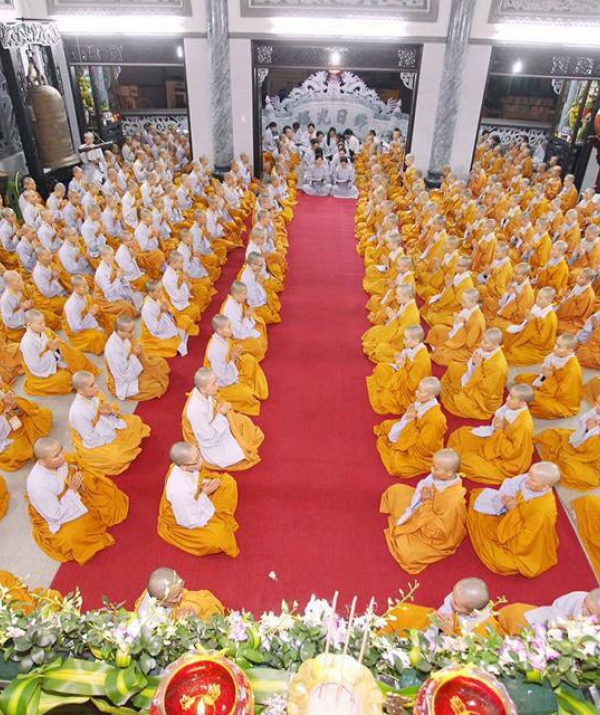
Rời bỏ uế trược, khéo nghiêm trì giới luật, sống khắc kỷ và chân thật, người như thế mới xứng đáng mặc áo cà-sa.Kinh Pháp cú (Kệ số 10)

Muôn việc thiện chưa đủ, một việc ác đã quá thừa.Tủ sách Rộng Mở Tâm Hồn
Kẻ thù hại kẻ thù, oan gia hại oan gia, không bằng tâm hướng tà, gây ác cho tự thân.Kinh Pháp Cú (Kệ số 42)
Đừng than khóc khi sự việc kết thúc, hãy mỉm cười vì sự việc đã xảy ra. (Don’t cry because it’s over, smile because it happened. )Dr. Seuss
Kẻ làm điều ác là tự chuốc lấy việc dữ cho mình.Kinh Bốn mươi hai chương
Nếu bạn muốn những gì tốt đẹp nhất từ cuộc đời, hãy cống hiến cho đời những gì tốt đẹp nhất. (If you want the best the world has to offer, offer the world your best.)Neale Donald Walsch
Trong sự tu tập nhẫn nhục, kẻ oán thù là người thầy tốt nhất của ta. (In the practice of tolerance, one's enemy is the best teacher.)Đức Đạt-lai Lạt-ma XIV
Không làm các việc ác, thành tựu các hạnh lành, giữ tâm ý trong sạch, chính lời chư Phật dạy.Kinh Đại Bát Niết-bàn
Ngu dốt không đáng xấu hổ bằng kẻ không chịu học. (Being ignorant is not so much a shame, as being unwilling to learn.)Benjamin Franklin
Ai sống quán bất tịnh, khéo hộ trì các căn, ăn uống có tiết độ, có lòng tin, tinh cần, ma không uy hiếp được, như núi đá, trước gió.Kinh Pháp cú (Kệ số 8)
Cho dù người ta có tin vào tôn giáo hay không, có tin vào sự tái sinh hay không, thì ai ai cũng đều phải trân trọng lòng tốt và tâm từ bi. (Whether one believes in a religion or not, and whether one believes in rebirth or not, there isn't anyone who doesn't appreciate kindness and compassion.)Đức Đạt-lai Lạt-ma XIV

Trang chủ »» Danh mục »» TỦ SÁCH RỘNG MỞ TÂM HỒN »» none »» none »»

none
»» none

(Lượt xem: 7.956)
Xem trong Thư phòng    Xem định dạng khác    Xem Mục lục 


Văn học Phật giáo - Nguồn gốc và ý nghĩa an cư kiết hạ

Font chữ:

Origin of the summer retreat

Every year, there are 3 months of summer retreat for monks and nuns, from the full moon of the fourth month to the full moon of the seventh month (lunar calendar). The fourth month of the lunar calendar is the beginning of the rainy season in Vietnam, in India this month there is a lot of rain. In the past, when the Buddha was still alive, monks and nuns normally went to teach here and there, rarely staying in one place and relying on the Venerables and Venerables with profound precepts to remind and teach them how to practice.

When the rainy season comes, the water rises and many insects and ants crawl out onto the road. When monks and nuns go here and there, they will trample on them. Because of his compassion, the Buddha not only loved people but also all the small insects and ants, so he could not bear to trample on them during the flood season. Therefore, the Buddha established three months of seclusion to stay in one place to avoid killing insects.

Thus, the three months of seclusion are for monks and nuns to avoid trampling on insects and ants, committing the sin of killing, expressing the Buddha's boundless compassion. Next, during the seclusion season, monks and nuns gather in one place, inviting highly virtuous and respected monks and nuns to remind and teach them how to practice. Thanks to those who have experience on the path of practice, they go before and teach those who come after. Therefore, everyone in the community has enough conditions to progress, without obstacles or retreats.

Meaning of seclusion season

In short, the seclusion season has two meanings: showing compassion and not being able to harm living beings, and at the same time focusing on guiding and teaching monks and nuns to practice and study. Thanks to the teachings of the highly virtuous monks for three months, the monks and nuns practiced diligently and achieved good results.

Therefore, in the past, there were monks who, after three months of retreat, attained a fruition. If they were close to reaching a fruition, but when the retreat ended, they asked the Buddha to let them stay and practice more to attain the fruition such as Srotapanna, Sakadagami...

Thus, the retreat season is the season when monks and nuns strive to practice to advance to the fruitions or merits that they had not yet achieved before. That is the main point that all monks and nuns today must remember.

Nowadays, our country has wide roads, vehicles do not have to trample on construction like in the past, but according to the Buddha's teachings, we also practice the retreat season. In this time, we cannot show compassion like in the Buddha's time, we can only gather together in one place, one area and then try to practice diligently. Relying on the elders who practiced before us, who understood the Dharma better, to guide and teach us, we strive to practice to achieve good results. Thus, the focus of the retreat today is more on studying and practicing than on the fear of death. Therefore, the three months of retreat are very precious.

In a year of twelve months, we are busy with many issues, such as communicating with Buddhists, or because of other causes and conditions, you go here and there, not staying in one place to practice diligently. During the rainy season, all other things are put aside and all energy is devoted to studying and practicing. I hope that all of you will try to devote all your energy to studying and practicing to achieve good results.

The rainy season is the season when monks and nuns try to practice to advance to the positions or achievements that they have not achieved before.

The rainy season is the season when monks and nuns try to practice to advance to the positions or achievements that they have not achieved before.

Although three months is not long, with a strong will and boundless enthusiasm, we can still achieve some results on the path of practice. As Buddhist monks or nuns, we cannot learn from the work of worldly people. We are not economists, architects, diplomats, or scholars... but practitioners.

Why do I say that? Because on the path of cultivation, when we talk about effort, about trying to cultivate, we mean to liberate ourselves from birth and death. We cultivate to realize all the truths of humanity and of all things. Therefore, we place great importance on cultivating to achieve results. Cultivators cannot be good at making money, but must focus their energy on cultivation.

Therefore, our time cannot be devoted to other things. Cultivators live honestly and peacefully, not as people who are good at communicating. People who are good at communicating with the world seem to gain many benefits, but that is the quality of a diplomat, not of a cultivator.

Monks and nuns must strive to realize the truth in their lives, liberate themselves from birth and death, not to please everyone. If a monk always pampers people to make them happy and satisfied, we will unintentionally become diplomats, not monks.

We study the Dharma to understand, understand to practice, not to be scholars with high degrees, this or that position. If we study for degrees, for positions, we are scholars, not monks.

The Buddha's teachings are very correct, they are the truth, but sometimes people who study the Dharma are still shallow and do not understand. Therefore, we must be guided and taught by our predecessors, by our masters, to understand, understand and then apply it to practice, not to chase after degrees and degrees, to be satisfied. This is extremely important. So, how a monk must practice, what he must do, today I will remind all monks and nuns to remember.

Practice requires compassion and wisdom

The most and simplest thing we need to practice is to have both aspects, compassion and wisdom. Compassion should love all living beings, all people, all species. Spread love, help, and protect living beings. Compassion is not enough, but must have clear wisdom, clearly see the truth, attain the truth, and teach that truth to everyone to see and understand like oneself. Therefore, wisdom and compassion are inseparable.

Ordinary people think that compassion comes first and then wisdom, but in fact, wisdom must come first and then compassion. Because, seeing the truth, knowing the truth makes us free from the suffering caused by ignorance and confusion. When we see the truth, looking back at our brothers and friends who are still in the dark, we cannot bear to let them suffer, so we use all our knowledge and understanding to remind our friends, relatives, and everyone to see and understand together so that they can suffer less. That is compassion.

Wisdom and compassion are the two key things for practitioners. Therefore, when we talk about taking refuge in the Buddha, we are talking about taking refuge in the Two-footed One. Two-footed means having two things: blessings and wisdom. If blessings and wisdom are complete, that is the Buddha.

We always respect and honor the Buddha because he is full of wisdom and compassion. What should we do when we practice according to the Buddha? We must also have these two parts, so there is a saying: "When blessings and wisdom are both complete, the way is Buddha." Blessings are compassion, wisdom is wisdom, both are complete to reach Buddhahood. A practitioner who lacks blessings and wisdom will never become a Buddha.

On the path of practice, although the Buddha taught many Dharma methods, the real foundation is having blessings and wisdom. If these two parts are missing, then one is not worthy of being a practitioner. Wherever monks and nuns gather, there are still quarrels and fights, that is a lack of compassion. Because of the lack of compassion, we do not love each other, do not forgive each other, do not guide and teach each other, so we quarrel, compete, and are not worthy of being a monk.

To practice is to study, to expand our wisdom, to try to meditate so that our wisdom shines, only then can we fully qualify as a monk. This is very essential for all monks and nuns. It can be said that if we can practice, we will gain everything, if we cannot practice, we will lose everything.

To practice is to repay the Four Great Graces

To receive everything is to gain what? The purpose of our practice is to repay the Four Great Graces: above, the grace of parents, the grace of Buddha, the grace of the nation, the grace of donors; below, to save the three realms of suffering. If we can practice, we can repay the four graces, save the three realms of suffering, that is to gain everything. On the contrary, if we cannot practice, we will lose everything, because we cannot repay the four great favors, we cannot save the three realms of suffering, and that means we will lose everything.

Whether you are in the inner or outer courtyards, and have settled down, you should try to practice in accordance with the meaning of the settlement. This is the key point, to create favorable conditions for all monks and nuns to practice together. If conditions are favorable but we cannot practice, and if we encounter adverse conditions, how can we practice? Therefore, practitioners must always remember the four great favors, because we must make efforts, we must try to practice properly.

What are the four great favors? They are the favors of our parents. If we can practice, we will repay the kindness of our parents. Buddha taught that if a child practices and attains enlightenment, his parents will be born in heaven. After the Buddha attained enlightenment, his mother and father were both fully meritorious and were born in heaven. That is how the Buddha repaid the kindness of his parents.

If we can practice, we will repay the kindness of our parents. Buddha taught that if a child practices and attains enlightenment, his parents will be reborn in heaven.

If we practice, we will repay our parents' kindness. Buddha taught that if a child practices and attains enlightenment, his parents will be reborn in heaven.

A child of Buddha does not have to wait until his parents die to repay their kindness, but while they are still alive, he must practice to achieve good results. When parents see their children practice and their morality increases, they will also be happy to follow suit and practice. Thanks to practicing, they will escape suffering, will not fall into the three evil realms, and in the next life can return to being human or be born in good realms. Even if we have not yet attained enlightenment, with a determination to practice correctly, we can also bring concrete benefits, and our parents, brothers and sisters will develop the mind to practice with us. That is repaying our parents' kindness.

Only when we practice can we repay the Buddha or our teachers. Buddha or our teachers both want to teach their disciples to practice and achieve good results, so in Buddhism, there is a saying: "Repaying the Buddha is repaying an unrequited kindness." What does it mean to not repay a kindness? The Buddha has entered Nirvana, the Patriarchs have also passed away, but because they love all living beings, they taught us to continue the lamp of wisdom, to illuminate them. We obey the Buddha's words, try to light the torch to make it bright, guide everyone to escape the darkness of suffering. That is to repay the Buddha's grace by applying the teachings, following their vows. This is very noble, very precious.

Next is the grace of the nation. If we practice enough virtues, then teach people to live honestly, to love and care for each other with compassion. We are clear-sighted and do not commit wrongdoings, and try to do good and beautiful things. Thanks to that, we bring security to the country, happiness to everyone, and help the country prosper. That is to repay the grace of the nation.

We practice not to make our own rice to eat, everything depends on donors. Buddhists respect the practice of monks and nuns, so some people help us with this, some people help us with that, thanks to that we can practice peacefully. Those who have great merit in helping us practice, we cannot forget. We practice well, donors are happy to see worthy results, they also practice and learn together. That is how we repay the donors' kindness.

Practice to save us from the three suffering realms

Thus, thanks to practice, we repay the four great favors, and also thanks to practice, we can save us from the three suffering realms: hell, hungry ghosts, and animals. Monks and nuns practice and teach Buddhists to avoid doing ten evil deeds. By not creating evil, they will not fall into hell, thus saving sentient beings from hell. Because of greed, stinginess, and malice, they must fall into the realm of hungry ghosts. We practice and use the Dharma, compassion to guide and teach people to reduce greed and stinginess, and not have evil thoughts. That is how we save them from falling into the realm of hungry ghosts. Animals are creatures that do not distinguish between good and evil, good and evil, sin and merit, etc. We cultivate through wisdom to see clearly sin and merit, good and evil, right and wrong... From there, we guide and teach people to avoid evil and do good, abandon sin and cultivate merit, abandon evil and follow the right path. That is to save people from the animal realm.

Saving the three paths of suffering means saving them from creating causes to suffer the consequences of falling into the three paths of suffering, but it does not mean entering the three paths of suffering to save all living beings in them. Saving here means saving the causes of hell, hungry ghosts, and animals. If the cause is saved, the result will definitely be escaped. It is clear that thanks to cultivation, above we repay the four favors, below we help save the three paths of suffering.

We wear the monk's robes in the temple or in the hermitage but do not try, do not make an effort, then we ourselves will not get anything, in terms of the four favors, the three evil paths do not help anyone. Because we cannot help anyone, we lose everything.

We wear the monk's robes in the temple or in the hermitage without trying, without making an effort, we ourselves gain nothing, in terms of the four graces and the three evil realms we do not help anyone. Because we cannot help anyone, we lose everything.

We wear the monk's robes in the temple or in the hermitage without trying, without making an effort, we ourselves gain nothing, in terms of the four graces and the three evil realms we do not help anyone. Because we cannot help anyone, we lose everything. Therefore, monks and nuns should strive to practice diligently, taking advantage of the three months of retreat, each person making an effort to fulfill the duties of a monk. That is essential.

Next, if you are truly a practitioner, you must practice these three key points. The first point is to eliminate afflictions. If a practitioner is sad in the morning and angry in the afternoon, how can you call it practicing? Because of our stubbornness, we embrace happiness, sadness, anger, and resentment. There is no joy on the path of practice, and how can we benefit others? Therefore, a practitioner must first eliminate afflictions. No matter who says they are better than us, who looks down on us, we see that as an illusion.

To practice, you must open your heart to compassion, you must be enlightened, do not compete, right or wrong. Afflictions only lead you into samsara, there is no benefit in holding on to them forever. Once you follow the cycle of samsara, what else can you do? You yourself are already ruined, and you have ruined everyone who relies on you. Therefore, a person determined to practice must eliminate all afflictions in your heart. Anger, sadness, resentment, and annoyance must all be put aside. Remember that it is a childish game that is not worthy, it is not a problem, let it go. We are children of Buddha, disciples of Sakyamuni, and cannot do childish things, the things of fools.


First, you should try to eliminate your afflictions and attachments, then you can enter the path in a good and peaceful way.

Next, the second step, when you have eliminated your afflictions and attachments, you can open your heart to compassion, love everyone, love everything. When you see a fellow practitioner facing adversity, what can we do to help, try to help him so that he can progress in his practice. That is compassion for the close ones, compassion for the fellow practitioners who are by our side. Never have the idea of hindering the mind of others in their practice. If compassion does not cover everyone, at least it should cover the neighborhood, around you, so that everyone can be happy and at peace to practice together.

Don't think that you practice well and then look down on those who practice poorly, causing them to be troubled. Or this person sees that the other person has many means while practicing, but he lacks, so he gets upset, speaks sarcastically, etc. He never has that kind of mind. We must cultivate compassion, honesty, love, and help each other, so that everyone around can practice and progress. Those are the true practitioners.

Third, practicing requires wisdom. Monks and nuns come here to the Dharma, to practice, not for a trivial reason. Therefore, we must open our eyes of wisdom. We cannot practice while being blind and dark, unable to distinguish between right and wrong.

Therefore, the first point is to diligently study, to develop the wisdom of the teacher, then try to meditate to calm the mind. When the mind is calm, the wisdom without a teacher will shine. From the wisdom with a teacher to the wisdom without a teacher, we must make an effort, we need to open these two wisdoms, do not let them be blind and dark. Only then can one be called a true practitioner, in accordance with the Buddha's teachings.

If one does not do these three things, one cannot practice. If one cannot practice, all that one expects will be lost. Today, during the rainy season, I remind all monks and nuns to make an effort. Three months are devoted to practice, but if we do not try to practice, that is blameworthy. If we do not fulfill our duty, we will disappoint everyone who is waiting for us, and we are irresponsible. I hope that all monks and nuns in the Thuong Chieu monastery, both the inner and outer monasteries, will strive to practice diligently so that this year's rainy season retreat will have the best results. Those in the inner monasteries must set an example for everyone around to rely on. Only then can one be worthy of being a disciple of the World-Honored One.

Every year after the rainy season retreat, all monks and nuns from the monasteries gather to celebrate my birthday, that is, to congratulate me on adding another year to my summer retreat. I also congratulate all of you on adding another year to your religious life. Normally in the world, every year on the first day of the Lunar New Year, people wish each other longevity. In religion, the end of the seventh month of the rainy season is considered a birthday, wishing each other happy religious age. Worldly longevity is the longevity of the four-element body, religious longevity is the longevity of the precepts, body, and wisdom. The two are different.

When the four-element body grows one year older, it is one part closer to death, so the longer the lifespan increases, the closer to death. On the contrary, the longer the lifespan in religion increases, the closer to Bodhi fruit, not closer to death. The rainy season is the time when we accumulate merit, strive to practice to increase virtue, increase wisdom. When virtue and wisdom grow, the precepts, body, and wisdom grow. The essence of Buddhist practitioners is to increase their wisdom every day until it is complete, which is called attaining Bodhi.

The rainy season is the season to accumulate merits

Every year, monks and nuns try to practice diligently during the three months of the rainy season, always being mindful, thanks to that merit, their wisdom grows. If their wisdom increases every year, the path to Bodhi is closer. I think that after a rainy season, all monks and nuns are happy because they are about to be near the Buddha's Bodhi tree. So, gaining a year of religious life is something to be happy, joyful, and encouraged. Gaining a year of life is something to be worried about, something to be afraid of because death is imminent. Therefore, the age of religious life is very precious, and every disciple who leaves home to follow the Buddha tries to be worthy of a year of religious life. Don't let a rainy season pass, and count another year of religious life as only a number, a form, not a virtue. That is a sad thing.

This year, the monks and nuns are blessed with good fortune to gather in one place, with teachers above and friends below, and Buddhists around to support us in our practice to perfection, without obstacles. Good friends and knowledgeable people always push us forward, that is a great blessing, we must try to fulfill our wishes, with the meaning of the three months of retreat. I remind all monks and nuns to be clearly aware of the importance of the retreat season like that. We must remember and practice well.

Next, I remind monks and nuns and all Buddhists to practice at all times. All those who have made a vow to leave home are called monks. As monks, we do not accept our status as ordinary people but are determined to reach the position of Saints. If we accept the position of ordinary people, we will keep our hair in the world, why become monks? We have shaved our hair to become monks because we do not like it, do not want to bury ourselves in the mundane world.

Making a vow to leave home to practice the path of liberation, we immediately establish the path to reach the position of Saints. If we want to advance to Sainthood, but only speak with language and ideas, without practicing the teachings of the Saints, we cannot advance to Sainthood. We renounce the worldly life and become monks, vowing to abandon all the old habits and vices of the world, practicing the conduct of the Saints. But how much percent of the worldly life has we renounced when we enter the temple? Have we renounced it completely 100% or have we still regretted it? Have we renounced about thirty or forty percent, and still have fifty or sixty left over, is that right? Renouncing like that is not the right level.

We remember to renounce from the form of family to the entanglements in our minds. In the past, we lived with our parents, siblings, and relatives. Now, we have left our secular family, renouncing what people in the world compete for, such as wealth, beauty, fame, food, and sleep, to enter the path and advance to Sainthood. We have overcome all the things that people in the world are drowning in. We must be very brave to step out of the secular home, but have we renounced our worldly habits and customs, have we renounced them all? That is the question that each person must ask and answer for themselves.

The river of delusion and sea of love is where sentient beings are drowning, the Buddha said it is very pitiful. What should we, the monks and nuns, be like? Are we still deluded and in love, or are we free from the net of delusion and love? If sentient beings are drowning in the river of delusion and sea of love, then the practitioner is the one who rows the boat of Prajna to save them. What is Prajna? It is wisdom. When sentient beings are deluded, we must be enlightened; when sentient beings are defiled by love, we must be free from worldly affairs. Only then can we truly transcend the river of delusion and sea of love.

Are you now rowing the boat of Prajna, or are you racing with sentient beings in the river of delusion and sea of love? Each of you should ask yourself this question. Are we rowing the boat of Prajna to save those who are drowning in the river of delusion and sea of love, or are we also struggling in the river of delusion and sea of love like them? If we are struggling in the river of delusion and love like everyone else, it is a great loss for us. Because sentient beings do not have the vow to leave the world, so they struggle in it. What if we have the vow to leave the world and still struggle in it? People have hair, suppose they meet someone rowing a boat in it, they can raise their heads, grab their hair and pull them onto the boat. A bald person has no hair to grab and pull, even if he comes up, no one can save him. I say it jokingly, but it is a fact.

A practitioner who cannot recognize the truth, cannot recognize his own value, is beyond saving. It is better to be deluded by the world and be able to awaken, to be able to save. Being a practitioner but still deluded like ordinary people is beyond saving. I say this so that you can understand the meaning and value of a practitioner.

Are we rowing the boat of Prajna to save people drowning in the river of delusion and love, or are we also struggling in the river of delusion and love like them?

Are we rowing the boat of Prajna to save people who are drowning in the river of delusion and love, or are we also struggling in the river of delusion and love like them?

We have become monks and nuns, and have determined to practice the path of liberation, so there is no reason to turn back and indulge in worldly affairs. I would like to ask the monks and nuns, have you ever regretted the dregs of the world? I don't know if you regret it, but sometimes I see one or two people wanting to turn back. Therefore, we must understand and remember our responsibilities and duties so as not to fall into regrettable situations. What we are doing cannot be different, we cannot move forward and regret what is behind. We must courageously rise up, move forward, and not retreat. To retreat is to lose both. Lose the normal person because of living differently from everyone else and also lose the will to leave the world.

Becoming a monk means leaving the world

So, having become a monk means leaving the world. Abandoning the family form, the way of dressing on the outside, and even the mind of attachment inside. Even if the form is abandoned but the mind is not abandoned, then we are only different from worldly people on the surface, not different from the mind of a Saint. Although we have become monks but have not yet attained Sainthood, however, our mind is directed towards the Saintly Path. Having directed towards Sainthood, all things belonging to the world must be cut off, must be let go, must not cling, regret. Only then can we be worthy of being a monk.

Abandoning the form is not too difficult, but abandoning the mind is very difficult. Those who leave home to become monks are initially very brave, thinking that they can abandon everything, but once they enter the temple, they cannot abandon it. What cannot be abandoned? In the real world, there is fame and profit. When we enter the temple, there is no more fame and profit. Therefore, giving up fame and profit seems a bit easy, but giving up this worldly ego, winning and losing, right and wrong is very difficult.

Although entering the temple in the form of a monk, we still cling to the notion of "I am better than that, I am wrong, I am right and that is wrong, I am righteous and that is evil, etc. We have not yet given up that mind. Therefore, it is reasonable that when entering the temple, we are truly a good person, the teacher teaches, the Buddha teaches, the Patriarch teaches, we do exactly as the teacher teaches, but in reality, it is not like that. A courageous person leaves the family life, if there is anything against, if there is anything contrary, those things still happen as usual.

With three or four people, there is the dissatisfaction of three or four people. With one or two people, there is the dissatisfaction of one or two people. With fifty or seventy people, there is the dissatisfaction of fifty or seventy people. We are always dissatisfied and displeased. Whom are we dissatisfied with and displeased with? Of course, it is the other person, in the worldly sense, the opponent. Those who face you, you are not satisfied, not satisfied. Always remember not being satisfied with this person, not being satisfied with that person, but if you ask yourself whether you are satisfied or not, it is difficult to answer. You all have to ask yourself this question carefully.

When you first became a monk, what did you vow? What did you promise your parents, what did you promise your relatives, have you fulfilled it now? You do not remember that, but you keep remembering this person did not satisfy you, that person upset you, etc. You keep being sad and blaming others, but you do not remember that you yourself are not worthy of anything. When your parents leave to become monks, they must cry and lament, sometimes they are pulled away from allowing you to become monks, but you still courageously and resolutely go. Once you enter the temple, you cannot let go of childish quarrels and fights. What do you think? Is it because you have not yet abandoned your mundane thoughts?

If you do not abandon your mundane thoughts, you still quarrel and fight here and there, that is an obstacle on the path of cultivation, causing the Bodhi mind to be obscured. From then on, the aspiration to attain enlightenment and liberation turns to dust and bubbles. If one wishes to achieve one's original vows but only finds emptiness, how can one attain true results? If there are any, they are just bubbles. Therefore, if you have become a monk, you must remember your original vows and sincerity.

Many older people who have families and children see the suffering of human life, see the pitiful ignorance of sentient beings, so they are determined to become monks to save them. But after becoming a monk, they cannot let go of worldly habits, and in the end, they are still wandering around, wanting to save others but not being able to save themselves, then who can they save? Therefore, you must be courageous, must look back at the truth, and always examine yourself. Every day, every month, every year, you must clearly see how much progress you have made, what good points you have, and what bad points remain. See clearly to eliminate the bad and bad things you have cultivated in the past. Only by no longer embracing worldly habits can you walk on the path of the Saints. Thus, you will see that the monastic life is sublime and infinitely precious. That is to say the habit of self-centeredness and contempt.

The Sangha's hatred is not sufficient

Next are the habits of sadness, anger, love and hate. When we become monks, should we be sad for someone for five days or seven days, angry for someone for five years, seven years, and love or hate someone? Buddha also taught us: "The Sangha's hatred is not sufficient". They allow us to be angry, but not to be angry for more than one night. The Sangha should not have the right to be angry, but they also console us for being angry, but not to be angry for more than one night. Here, monks and nuns living together, do they get angry for more than one night, or after five months, seven months, one year, two years, are they still angry?

All of us are not Saints, naturally we still have bad points, when we encounter things that go against our will, we are not happy. Not being happy means being sad and angry. For those who do not know how to practice, when they get angry, they hold it in their hearts to take revenge. For those who know how to practice, when they get angry or encounter things that go against their will, they resolve it immediately, not nurturing and holding it in their hearts. Only then can they truly be considered as people who know how to practice. A person who has shaved his head, wears dyed clothes, and when angry, demands to pay this or that, does he still have the qualifications to be a monk? Such people are truly unworthy of being a monk.

A monk, no matter who goes against his will, if he is not strong enough to win immediately, will at least resolve the matter in one day or five or seven hours, that is a true monk. All of you who have practiced must always remember in your heart that you are a person who has abandoned the position of a common person to advance to the position of a Saint, must abandon the old worldly habits, should not nurture and embrace them anymore. That is what I am talking about anger and sadness.

Next, talking about love means love. Buddha said that love for worldly people is the most serious illness of living beings. The world is drowning in the river of delusion and sea of love, when you practice, you must climb to the shore, you have no right to drown in it anymore. If you practice, you must get out of the sea of love, if you are drowning in the sea of love, you cannot be called a monk, so how can you save anyone. That is an extremely bad thing. We must be brave enough to overcome and not repeat the things we used to hate.

As a monk, if he has a thought of love, he must be brave enough to cut it off and not let it drag him down. Only then can we leisurely row the boat of Prajna to save those who are drowning in the sea of love. The sutras often teach: "A drowning person can never save a drowning person." To save a drowning person, one must have a boat and know how to row in order to be able to save them. If we drown with everyone else and say we save them, it is not true.

When it comes to practicing, we must resolutely get rid of all kinds of illnesses, such as anger, sadness, love... These are worldly habits. We do not accept being a worldly person, so we should not harbor those things. This is a truth.

Cutting off the River of Ignorance - Leisurely walking on the shore of enlightenment

Practitioners should walk leisurely on the shore of enlightenment. The shore of enlightenment is the shore of peace and freedom. Why do we say leisurely on the shore of enlightenment? Since all bonds have been cut off, what else keeps us busy, what else hinders us? So we can be at ease on the shore of enlightenment. In the Song of Enlightenment, Zen master Huyen Giac said: “Thương hành của con thực, thương lập bộ, Đạt gia đồng du lịch nhân-bân-đân-do”. That means the enlightened person often walks alone on the shore of Nirvana. The shore of enlightenment is also called the shore of Nirvana.

One side is immersed in the river of delusion and the sea of love, the other side is at ease on the shore of enlightenment, which side do we choose? When you became a monk, you have already made your decision, so from now on, monks and nuns must be at ease, at ease on the path of enlightenment, on the shore of Nirvana, no longer dragged by birth and death. Obviously one side is dark, one side is light, one side is suffering, one side is happiness, we have made our choice, so now we must keep what we chose in the beginning.

When we become monks, we must make progress, become more noble, more beautiful, there is no reason why after becoming monks, we become more and more troubled, worse than before we became monks. That is something that monks and nuns must truly examine ourselves. Our teachers and friends have gone before us, are guiding us on the path of enlightenment, but we refuse to follow it, it is truly sad and blameworthy.

One side is sinking in the river of delusion and the sea of love, the other side is leisurely on the shore of enlightenment, which side do we choose? When you became monks, you have already made your decision, so from now on, monks and nuns must be people who are leisurely, leisurely on the path of enlightenment, on the shore of Nirvana, no longer dragged by birth and death.

One side is sinking in the river of delusion and the sea of love, the other side is leisurely on the shore of enlightenment, which side do we choose? When you become a monk, you have already made your decision, so from now on, monks and nuns must be people who are at ease and leisurely on the path to enlightenment, on the shore of Nirvana, no longer dragged by birth and death.

Remember, when talking about practicing, we are talking about the value of a person who has transcended the world and is liberated, not talking about a mundane, addicted person. We have many blessings, so we can gather together to practice, we must know how to nurture this blessing to grow bigger and bigger, do not let it wear away. People who are determined to practice must always head straight on the path to enlightenment, should not regretfully look back at the trivial things of the past. Only then will they be worthy of being the ones to row the boat of Prajna to save sentient beings from the cycle of birth and death. That is the essential place, the unforgettable duty of monks and nuns. Anyone who forgets these things has failed their parents, their donors, and their teachers.

After a season of retreat, the monks and nuns have already established a moral foundation. From now on, they must enthusiastically advance on the path of enlightenment, not falling back into the old path of delusion. To practice, one must be enlightened, and definitely not be deluded. Only then can one truly be worthy of a practitioner with complete merit.


    « Xem chương trước       « Sách này có 1542 chương »       » Xem chương tiếp theo »
» Tải file Word về máy » - In chương sách này


_______________

MUA THỈNH KINH SÁCH PHẬT HỌC

DO NXB LIÊN PHẬT HỘI PHÁT HÀNH


An Sĩ toàn thư - Khuyên người niệm Phật cầu sinh Tịnh độ


Phật pháp ứng dụng


Một trăm truyện tích nhân duyên (Trăm bài kinh Phật)


Chớ quên mình là nước

Mua sách qua Amazon sẽ được gửi đến tận nhà - trên toàn nước Mỹ, Canada, Âu châu và Úc châu.

XEM TRANG GIỚI THIỆU.

Tiếp tục nghe? 🎧

Bạn có muốn nghe tiếp từ phân đoạn đã dừng không?


Quý vị đang truy cập từ IP 216.73.216.60 và chưa ghi danh hoặc đăng nhập trên máy tính này. Nếu là thành viên, quý vị chỉ cần đăng nhập một lần duy nhất trên thiết bị truy cập, bằng email và mật khẩu đã chọn.
Chúng tôi khuyến khích việc ghi danh thành viên ,để thuận tiện trong việc chia sẻ thông tin, chia sẻ kinh nghiệm sống giữa các thành viên, đồng thời quý vị cũng sẽ nhận được sự hỗ trợ kỹ thuật từ Ban Quản Trị trong quá trình sử dụng website này.
Việc ghi danh là hoàn toàn miễn phí và tự nguyện.

Ghi danh hoặc đăng nhập

Thành viên đang online:
Rộng Mở Tâm Hồn Viên Hiếu Thành Rộng Mở Tâm Hồn Huệ Lộc 1959 Rộng Mở Tâm Hồn Bữu Phước Rộng Mở Tâm Hồn Chúc Huy Rộng Mở Tâm Hồn Minh Pháp Tự Rộng Mở Tâm Hồn minh hung thich Rộng Mở Tâm Hồn Diệu Âm Phúc Thành Rộng Mở Tâm Hồn Phan Huy Triều Rộng Mở Tâm Hồn Phạm Thiên Rộng Mở Tâm Hồn Trương Quang Quý Rộng Mở Tâm Hồn Johny Rộng Mở Tâm Hồn Dinhvinh1964 Rộng Mở Tâm Hồn Pascal Bui Rộng Mở Tâm Hồn Vạn Phúc Rộng Mở Tâm Hồn Giác Quý Rộng Mở Tâm Hồn Trần Thị Huyền Rộng Mở Tâm Hồn Chanhniem Forever Rộng Mở Tâm Hồn NGUYỄN TRỌNG TÀI Rộng Mở Tâm Hồn KỲ Rộng Mở Tâm Hồn Dương Ngọc Cường Rộng Mở Tâm Hồn Mr. Device Rộng Mở Tâm Hồn Tri Huynh Rộng Mở Tâm Hồn Thích Nguyên Mạnh Rộng Mở Tâm Hồn Thích Quảng Ba Rộng Mở Tâm Hồn T TH Rộng Mở Tâm Hồn Tam Thien Tam Rộng Mở Tâm Hồn Nguyễn Sĩ Long Rộng Mở Tâm Hồn caokiem Rộng Mở Tâm Hồn hoangquycong Rộng Mở Tâm Hồn Lãn Tử Rộng Mở Tâm Hồn Ton That Nguyen Rộng Mở Tâm Hồn ngtieudao Rộng Mở Tâm Hồn Lê Quốc Việt Rộng Mở Tâm Hồn Du Miên Rộng Mở Tâm Hồn Quang-Tu Vu Rộng Mở Tâm Hồn phamthanh210 Rộng Mở Tâm Hồn An Khang 63 Rộng Mở Tâm Hồn zeus7777 Rộng Mở Tâm Hồn Trương Ngọc Trân Rộng Mở Tâm Hồn Diệu Tiến ... ...

... ...